How PPF Shops Can Handle New Vehicle Models Faster
Introduction: New Vehicles Are Reaching PPF Shops Faster Than Ever
For a PPF shop, a newly launched vehicle can represent both an opportunity and a challenge.
The opportunity is easy to understand. Owners of new vehicles, especially premium cars and electric vehicles, are often highly motivated to protect the original paint as early as possible. Some customers begin researching paint protection film before taking delivery of the vehicle.
The challenge appears when that vehicle arrives at the shop before an accurate pre-cut pattern is available.
As automakers introduce new models, facelifts, regional variants, sensor configurations, and electric vehicle platforms, PPF businesses need to respond faster. A shop may already have experience installing the previous generation of a vehicle, but that does not automatically mean the existing patterns will fit the latest version.
Differences can appear in:
→ Bumper geometry
→ Headlight and taillight shapes
→ Camera and sensor positions
→ Fender and hood dimensions
→ Trim packages
→ Charging-port locations
→ Regional body configurations
For the installer, the real question is therefore not simply:
“Do we have this model?”
The better question is:
“Do we have the correct pattern for this exact vehicle?”
For modern PPF businesses, the ability to identify new vehicles, find accurate data, request missing patterns, and move quickly from vehicle arrival to installation is becoming an important operational capability.
This is closely connected with why vehicle data is becoming a competitive advantage for PPF shops, especially as the number of vehicle variants continues to grow.
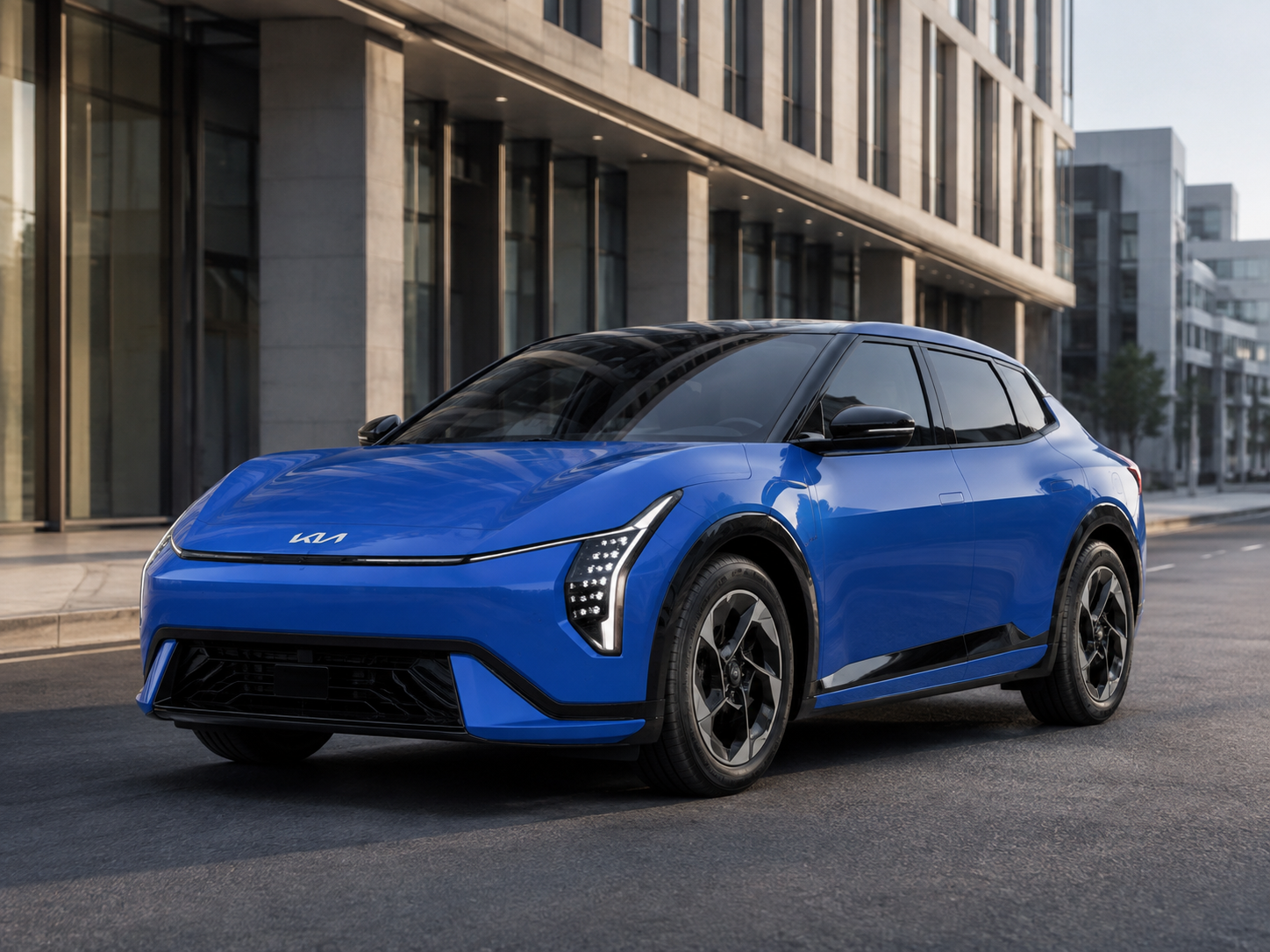
Why New Vehicle Launches Are a Bigger Challenge for PPF Shops
The automotive market is becoming increasingly fragmented.
A familiar model name can now represent multiple body configurations, regional specifications, trim levels, and model-year updates.
Electric vehicles add another layer of change. New EV brands and models are entering different markets, while established manufacturers continue expanding their electric lineups.
For a PPF business, every new vehicle potentially creates a new data requirement.
A customer may arrive only days or weeks after receiving a newly released model. At that point, the shop needs to determine whether an accurate pattern is already available.
If it is not, the shop has to decide what to do next.
Waiting too long may create several problems:
→ The customer may choose another installer
→ The installation appointment may need to be delayed
→ Technicians may spend additional time preparing the vehicle
→ Manual cutting may introduce additional risk
→ The shop may be unable to provide a clear delivery schedule
This makes new-model readiness more than a technical issue.
It is also a customer-service and business-development issue.
A PPF shop that can respond confidently to newly launched vehicles may be better positioned to capture early demand in its local market.
What Happens When a PPF Pattern Is Not Available?
Consider a practical situation.
A customer contacts a PPF shop with a newly delivered vehicle and requests full-front protection.
The shop checks its vehicle database but cannot immediately find the exact version.
There are several possible responses.
Wait for an Existing Pattern to Be Released
The simplest option is to wait until the required vehicle data becomes available.
This may work when the customer has a flexible schedule, but it creates uncertainty when the shop cannot estimate when the pattern will be ready.
For highly anticipated new models, customers may not want to wait.
Install the Film Manually
Experienced installers can sometimes complete jobs without pre-cut patterns.
However, manual installation changes the workflow.
It may require more technician time, more trimming, and additional decisions around complex edges, sensors, cameras, badges, and body features.
Manual installation remains an important professional skill, but it is not always the most efficient answer for a shop trying to standardize production.
Request Development of a Missing Pattern
Another option is to report the missing vehicle to the pattern provider.
This creates a more structured process because the provider can determine whether the vehicle has already been scanned, is currently being developed, or requires new data collection.
For shops that regularly work with new vehicles, having a clear pattern-request process can reduce uncertainty.
Collect New Vehicle Data
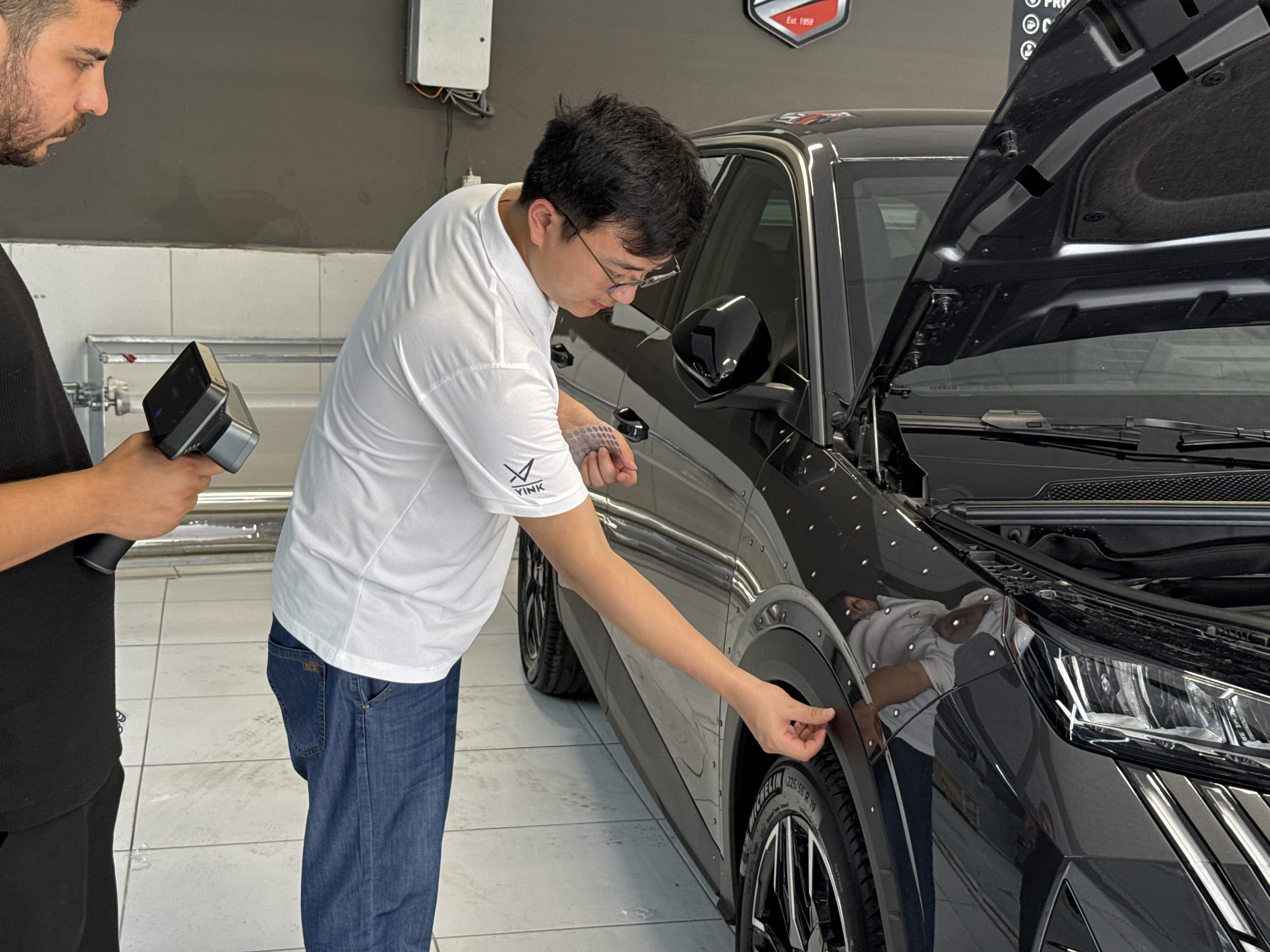
When the vehicle is accessible and the required data does not exist, vehicle scanning can become part of the solution.
The vehicle geometry can be captured and converted into data for pattern development.
This is particularly valuable in markets where certain vehicles or regional versions appear earlier than they do elsewhere.
The important point is that a missing pattern should not automatically become a dead end.
Professional PPF businesses need a defined workflow for moving from “pattern unavailable” to the next practical action.

Vehicle Identification Comes Before Pattern Cutting
One of the easiest mistakes in a pre-cut workflow is assuming that a familiar model name guarantees pattern compatibility.
It does not.
Before cutting film, technicians should verify the exact vehicle.
Useful information can include:
→ Manufacturer
→ Model
→ Model year
→ Body style
→ Trim or variant
→ Facelift generation
→ Regional specification
→ Sensor and camera configuration
Consider a bumper as an example.
Two vehicles may share the same model name and appear almost identical from a distance. However, one version may include a different parking sensor arrangement or trim package.
A pattern developed for the wrong bumper can create fitting problems even when most dimensions appear similar.
The same issue can occur with:
→ Front cameras
→ Radar areas
→ Headlight washers
→ Side markers
→ Decorative trim
→ Charging ports
This is why visual vehicle information can be valuable alongside pattern names.
A well-organized vehicle database should help technicians confirm that the selected data corresponds to the vehicle in front of them.
YINK’s Model Album is designed to support this identification process by providing richer vehicle reference information within the workflow.
The objective is straightforward:
Verify first, cut second.
That small operational discipline can help avoid unnecessary film consumption and lost technician time. For a deeper look at how incorrect data and fitment can affect installation, see our article on why pattern accuracy matters in PPF installation.
How 3D Scanning Shortens the New Pattern Development Cycle
When a new vehicle has no existing pattern data, accurate vehicle geometry must first be collected.
This is where 3D scanning becomes important.
A typical new-pattern development workflow can be understood as:
Vehicle Access → 3D Scanning → Data Processing → Pattern Development → Verification → Database Release
The scanning stage captures the geometry required for pattern development.
After the scan is collected, the raw information still needs professional processing. Surfaces, edges, openings, body features, and installation requirements must be interpreted before usable two-dimensional cutting patterns can be created.
This distinction matters.
3D scanning does not simply produce a finished PPF pattern at the press of a button.
It provides accurate source data from which professional patterns can be developed.
For shops interested in the data-collection process itself, YINK’s guide on how 3D scanning helps PPF shops get new vehicle patterns explains the workflow in greater detail.
The business advantage of a structured scanning system is speed of response.
Instead of relying entirely on manual measurements or waiting indefinitely for data to appear, a professional data network can identify missing vehicles, collect geometry, develop patterns, and make the resulting data available to installers.
Why Local Vehicle Scanning Still Matters
Automotive markets are global, but vehicle availability is not uniform.
A vehicle that is common in China may initially be rare in Europe.
A model sold in Turkey may have a regional configuration that differs from versions available elsewhere.
New brands may also enter the Middle East, Southeast Asia, Latin America, or other markets at different times.
This creates an important reality for PPF data development:
No single local market can represent every vehicle used worldwide.
Local scanning therefore remains important.
When data teams and partners can access vehicles in different countries, they can identify regional gaps and collect models that may not be available at a central location.
This is one reason YINK has developed vehicle scanning experience across more than 70 countries.
The goal of an international data network is not simply to accumulate a large number of patterns.
Its greater value is the ability to respond when different markets need different vehicles.
From Local Scan to Global Pattern Availability
A useful way to understand a global vehicle data network is to look at what happens after a vehicle is scanned.
Imagine that a newly released vehicle becomes available in one market before reaching other regions.
The local team gains access to the vehicle.
The vehicle is scanned.
The scan data is processed.
Patterns are developed and verified.
Once the resulting vehicle data enters the database, other supported markets can benefit from that development when the same configuration becomes relevant to them.
This creates a network effect.
One successful vehicle data collection project can support installers beyond the market where the original scan took place.
YINK’s experience working with international partners also demonstrates why local cooperation matters. On-site scanning support, technical training, and communication with distributors can help improve data collection capabilities in regional markets.
A real example can be seen in YINK’s on-site support and vehicle scanning cooperation with its Turkey partner, where local market experience and technical training worked together to strengthen regional vehicle data coverage.
For PPF shops, this global-local connection matters because vehicle demand does not follow one universal launch calendar.
Pattern Development Is More Than Tracing a Vehicle Panel
Accurate PPF patterns need to consider the realities of installation.
A digital outline that matches the visible edge of a panel is not automatically an installation-ready pattern.
Pattern developers may need to consider:
→ Stretch behavior
→ Edge positioning
→ Installation direction
→ Sensor openings
→ Badge locations
→ Complex curves
→ Wrapping requirements
→ Technician access
This is where experience becomes important.
Vehicle geometry provides the foundation, but pattern engineering determines how that geometry becomes useful to an installer.
The objective is not simply geometric similarity.
The objective is a pattern that supports practical installation.
That distinction becomes especially important on complex areas such as:
→ Front bumpers
→ Rear bumpers
→ Mirrors
→ Headlights
→ Spoilers
→ Deep recesses
For shops evaluating a vehicle pattern database, the number of available patterns is therefore only one consideration.
Data quality, vehicle identification, update speed, and usability also matter.

Why Faster Pattern Updates Matter to PPF Shop Revenue
Pattern availability may look like a software issue, but its effects can reach the commercial side of the business.
Imagine two local PPF shops receiving inquiries for the same newly launched vehicle.
Shop A cannot confirm whether the correct pattern is available and asks the customer to wait.
Shop B can identify the exact vehicle, confirm pattern availability, and schedule the installation.
The difference is not necessarily installation skill.
It is operational readiness.
Faster access to new vehicle data can help shops:
→ Accept new-model bookings earlier
→ Reduce uncertainty when quoting customers
→ Improve scheduling
→ Shorten preparation time
→ Build a reputation for working with new vehicles
This can be especially valuable for shops serving premium and enthusiast customers.
Owners who purchase a new or limited-availability vehicle often want protection soon after delivery.
If a shop repeatedly tells these customers that it cannot support new models, it may lose more than one installation.
It may lose referrals and future opportunities as well.
Pattern update speed can therefore influence both workshop efficiency and a shop’s ability to compete for high-value new-vehicle customers.
Building a New-Vehicle-Ready Workflow
PPF shops do not need to control the entire pattern-development process themselves.
They do, however, need a clear interna l process for dealing with new vehicles.
Monitor Upcoming Vehicle Launches
Shops can pay attention to vehicles that are likely to generate local PPF demand.
This may include:
→ Premium vehicle launches
→ New electric vehicles
→ Popular SUVs
→ Performance models
→ Major facelift releases
The objective is not to track every vehicle in the world.
It is to understand what customers in the local market are likely to buy next.
Verify the Exact Vehicle Before Cutting
Do not rely only on the customer’s description.
Confirm the physical vehicle whenever possible.
Check the model year, variant, bumper, sensors, cameras, and other visible differences before selecting a pattern.
Check Pattern Availability Before Confirming the Workflow
If a customer books a newly launched vehicle, check data availability before the installation date.
This gives the shop time to request missing data or make an alternative plan.
Discovering the problem only after the vehicle has entered the installation bay creates unnecessary pressure.
Create a Process for Missing Patterns
Every technician and service advisor should know what happens when a pattern cannot be found.
A simple internal process might be:
Confirm Vehicle → Search Database → Verify Variant → Report Missing Pattern → Provide Vehicle Information → Confirm Next Step
A defined process prevents employees from improvising different responses for every customer.
Record Difficult or New Vehicles
Shops can maintain internal notes on:
→ Newly encountered models
→ Regional variations
→ Pattern issues
→ Installation observations
→ Frequently requested vehicles
This knowledge becomes increasingly valuable as the business grows.
The Importance of Communication Between Shops and Data Providers
Vehicle databases improve when information moves in both directions.
Software providers collect and develop data, but PPF shops are often the first to encounter unusual configurations in the real market.
A shop may discover:
→ A regional bumper variation
→ A new trim package
→ A sensor configuration not previously documented
→ A facelift that arrived earlier than expected
→ A vehicle that is missing from the database
Reporting these differences creates useful feedback for data teams.
This is why support should not be viewed only as troubleshooting software problems.
For a professional PPF ecosystem, support is also a communication channel between installers and vehicle data developers.
When a shop encounters a missing or questionable pattern, useful information can include:
→ Vehicle brand and model
→ Model year
→ Clear vehicle photos
→ Trim information
→ Region
→ Specific panel required
→ Description of the difference
Better information can help technical teams understand the request faster.
For YINK users who need assistance with vehicle data or workflow questions, the YINK Support team provides a direct channel for technical communication.
How YINK Approaches New Vehicle Pattern Coverage
YINK’s vehicle data strategy is built around continuous collection, development, and improvement.
The current pattern ecosystem includes more than 450,000 verified patterns, supported by vehicle scanning activities across more than 70 countries.
These numbers matter, but database size alone is not the complete objective.
A useful vehicle data system also needs to help shops:
→ Identify the correct vehicle
→ Find relevant patterns efficiently
→ Respond to newly launched models
→ Communicate missing data requirements
→ Prepare patterns for practical installation workflows
YINK combines global vehicle scanning, pattern engineering, software development, and partner cooperation to improve this process.
The Model Album provides richer vehicle reference information to support identification, while ongoing vehicle data development helps expand coverage as new vehicles enter different markets.
This approach reflects a simple principle:
A PPF database should not be treated as a static library. It needs to evolve with the automotive market.
For more information about YINK’s development philosophy and global vehicle data experience, visit the About YINK page.
New Vehicle Data Is Becoming a Competitive Infrastructure
For years, PPF software was often viewed mainly as a way to send patterns to a plotter.
That role is becoming broader.
As the number and complexity of vehicles increase, the underlying vehicle database becomes part of a shop’s operational infrastructure.
The value of that infrastructure can be measured by practical questions:
How quickly can the shop identify a new vehicle?
Can technicians distinguish similar variants?
What happens when a pattern is missing?
Can the data provider access vehicles in multiple markets?
How quickly can new data move from collection to practical use?
Can installers communicate problems back to the data team?
These questions directly affect daily operations.
For a new PPF shop, choosing equipment and film is important, but choosing a workflow that can continue adapting to future vehicles is equally important.
Shops building their first digital workflow may also find our guide on what equipment a new PPF shop needs in 2026 useful when planning the complete production process.
For an established shop, the challenge is different.
The business may already have experienced technicians and a strong customer base. Its next efficiency improvement may come from reducing the time spent searching for data, solving version mismatches, or waiting for newly launched vehicle patterns.
Conclusion: New-Model Readiness Is Now Part of PPF Shop Operations
New vehicle launches will not slow down simply because PPF shops need more time to prepare.
Customers will continue arriving with new EVs, new premium models, facelifts, regional variants, and unfamiliar configurations.
The shops that respond effectively will be those with a clear process.
That process starts with accurate vehicle identification.
It continues with reliable pattern data, fast communication, structured pattern development, and access to a broader vehicle data network.
3D scanning plays an important role when new data must be collected, but scanning is only one stage of the larger workflow.
The complete process connects:
Vehicle Identification → Data Collection → Pattern Engineering → Verification → Database → Cutting → Installation
For PPF businesses, improving this workflow can mean more than saving preparation time.
It can help the shop accept new-model customers sooner, reduce uncertainty, protect installation quality, and build a stronger reputation in a rapidly changing automotive market.
The faster the vehicle market changes, the more valuable an adaptable vehicle data workflow becomes.
Frequently Asked Questions
What should a PPF shop do if a vehicle pattern is unavailable?
First, verify the exact model, year, variant, regional specification, and relevant body panel. Then check whether the pattern is under development or can be requested from the data provider. If new data is required, vehicle photos or scanning may be needed depending on the development process.
Why can the same vehicle model require different PPF patterns?
Vehicles with the same model name can have different model years, facelifts, trim packages, bumpers, sensors, cameras, and regional specifications. These differences can change panel geometry or required openings, so the correct variant should always be verified before cutting.
How does 3D scanning help create new PPF patterns?
3D scanning captures vehicle geometry that can be processed and used as the foundation for pattern development. Pattern engineers then convert the vehicle data into practical two-dimensional cutting patterns and verify them for installation use.
Why are new EVs challenging for PPF pattern databases?
The challenge is not simply that a vehicle is electric. The rapid introduction of new EV brands, platforms, models, facelifts, and regional configurations increases the amount of vehicle data that pattern providers and PPF shops need to identify, collect, and maintain.
Does having a large pattern database guarantee every new vehicle is available?
No. Database size is important, but no static database can guarantee immediate coverage of every newly launched or regional vehicle configuration. Update capability, vehicle identification, global data collection, and communication between shops and data providers are also important.